
How to Choose a CPM Machine: A Buyer’s Guide for Clinics & Distributors
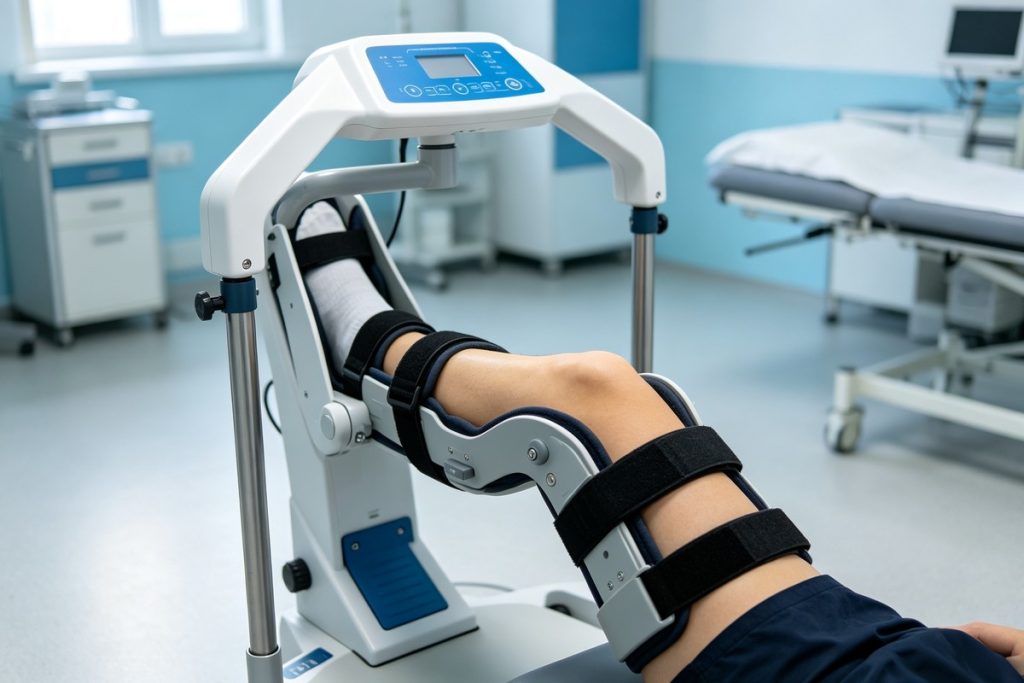
A continuous passive motion (CPM) machine moves a patient’s joint through a controlled range of motion without voluntary muscle effort. First adopted widely after total knee arthroplasty (TKA), CPM is now standard in orthopaedic rehab, stroke recovery and post-surgical protocols across clinics and hospitals. If you are a distributor, procurement manager or clinic owner sourcing CPM equipment, this guide breaks down the specs, certifications and commercial terms that actually decide whether a unit performs in the field — and whether it sells.
What a CPM Machine Is (and Why Clinics Buy It)
Unlike active-assist devices that rely on the patient’s own muscle, a CPM machine drives the joint mechanically. The clinical rationale is consistent: gentle, repeated passive motion helps control post-operative swelling, maintains articular cartilage nutrition and supports earlier mobilization. For a distributor, that translates into steady, repeat-demand demand from orthopaedic departments, rehab centers and home-care suppliers.
6 Specs That Decide Real-World Performance
1. Range of Motion (ROM)
The usable ROM window is the single most quoted spec. Knee units should cover at least 0–120°, with finer models reaching 0–135°. Shoulder and upper-limb CPM units must articulate the specific planes your customers treat. Always confirm the programmable ROM, not just the mechanical limit.
2. Motor Torque & Speed Control
Torque determines how smoothly the unit moves a resistive limb, especially in spastic or edematous patients. Look for stepper-motor driven units with adjustable speed (typically 1–4 cycles/min) and pause-at-limit settings. Under-powered motors stall under load — the fastest way to get a returns complaint.
3. Joint Coverage
Most distributors need more than knee units. A balanced catalog covers knee, hip, shoulder, ankle and upper-limb CPM. Our range includes dedicated CPM Knee Machines and ZB-X1002E CPM Knee Machines for lower-limb protocols, plus Upper-Limb CPM 2-in-1 and YTK-E Upper-Limb CPM units for shoulder/elbow/forearm rehab.
4. Portability & Power
Home-care and community rehab buyers prefer lightweight, rechargeable units. Hospital departments accept line-powered, bedside models. Confirm battery runtime, weight and whether the unit folds for transport — these details drive your after-sales ticket volume.
5. Control Interface
A clear touch-screen with preset protocols shortens clinician training and reduces mis-set ROM incidents. Basic button units are cheaper but harder to standardize across a multi-clinician setting.
6. Safety & Programmability
Non-negotiables: automatic reverse at ROM limits, emergency stop, and lockable patient straps. Programmable session time and angle hold are what rehab specialists actually ask for.
Certifications for Global Markets
Export buyers will not purchase without the right paperwork. Match the certificate to the destination market:
| Certificate | Required For | What Distributors Should Verify |
|---|---|---|
| CE (MDR) | EU / EEA | Valid EU representative + technical file; confirm it’s the current Medical Device Regulation, not the old MDD. |
| FDA 510(k) | United States | Clearance letter number; many overseas buyers resell into the US and need this on file. |
| ISO 13485 | Global QMS expectation | Manufacturer’s quality system cert — signals consistent production, not just a one-off test. |
| Other (RoHS / UKCA) | UK, specific regions | UKCA post-Brexit; RoHS for electronics compliance. |
All four CPM models in our range ship with CE and ISO 13485 documentation; FDA and regional certs are available on request for qualified distributors.
MOQ, OEM & After-Sales for Distributors
If you are buying to resell, unit price is the least of your concerns. Ask the supplier:
- MOQ — can you start with a trial batch, or are you locked into container-level volume?
- OEM / ODM — branding, language of the UI, and packaging customization for your market.
- Spare parts & warranty — motor and control-board lead times decide your service level.
- Training & marketing assets — clinical brochures and setup videos shorten your sales cycle.
Total Cost of Ownership (TCO), Not Just Unit Price
A cheap unit with a 6-month motor lifespan costs more than a premium unit over three years. Build your TCO from: unit price + shipping + import duty + expected spare-part replacements + clinician training time. For bulk programs, request a 3-year cost projection, not a per-unit quote.
Recommended CPM Models from Our Range
Based on the criteria above, these are the units we most often recommend to distributors:
- ZB-X1002E CPM Knee Machine — touch-screen, wide ROM, strong torque for clinic and hospital use.
- CPM Knee Machine — cost-effective bedside model for high-volume sourcing.
- Upper-Limb CPM 2-in-1 — shoulder/elbow rehab in one configurable unit.
- YTK-E Upper-Limb CPM — portable upper-limb CPM for home-care programs.
If you are also evaluating gait training equipment, see our rehabilitation exoskeleton robot buyer’s guide for key specs, clinical applications and OEM options.
Quick Comparison
| Model | Joint | Interface | Best For |
|---|---|---|---|
| ZB-X1002E CPM Knee Machine | Knee | Touch screen | Clinics & hospitals |
| CPM Knee Machine | Knee | Buttons / basic | High-volume sourcing |
| Upper-Limb CPM 2-in-1 | Shoulder / Elbow | Configurable | Rehab centers |
| YTK-E Upper-Limb CPM | Upper limb | Portable | Home-care programs |
Request a Quote
Looking to source CPM machines for your market? Request a quote with your target volume and certification needs, and our team will return a distributor pricing and OEM proposal. For model-specific specs, browse the CPM machine category.