
How to Choose a Rehabilitation Exoskeleton Robot: A Buyer’s Guide for Clinics & Distributors
Rehabilitation exoskeleton robots have moved from research labs into rehabilitation centers, homecare settings and even outdoor use. For clinics, distributors and importers, the challenge is no longer whether the technology works — it is which exoskeleton fits your users, your market and your budget. This guide walks through the six specifications that decide real-world performance, the clinical applications these devices serve, the certifications to verify before importing, and the OEM options available when sourcing from a manufacturer.
This guide is written for B2B buyers — clinic procurement teams, rehab equipment distributors and importing agents. It does not constitute medical advice.
What a Rehabilitation Exoskeleton Is (and Who It Helps)
A rehabilitation exoskeleton is a wearable robotic device that assists or supports human movement. Depending on the design, it can guide the legs through a walking pattern, support body weight during standing and gait training, or reduce the effort of everyday walking for people with reduced strength.
Compared with traditional gait training tools — parallel bars, walkers, or overhead body-weight support systems — an exoskeleton adds three things: consistent, repeatable movement assistance; adjustable support levels for different stages of recovery; and (on most current models) data capture that makes training progress measurable.
Typical user groups include:
- Stroke survivors relearning walking patterns during rehabilitation
- People with reduced mobility due to age, injury or neurological conditions
- Active users who want walking support for outdoor activities such as hiking
- Rehabilitation centers and homecare providers running structured standing and gait training programs
Because these use cases differ significantly, the first step in choosing an exoskeleton is defining yours. A device optimized for clinic-based gait training looks very different from a lightweight outdoor walking aid — and the specifications below will only make sense once the use case is clear.
6 Specs That Decide Real-World Performance
Marketing pages list dozens of parameters. In practice, these six decide whether a device works for your users:
1. Device weight and wearability
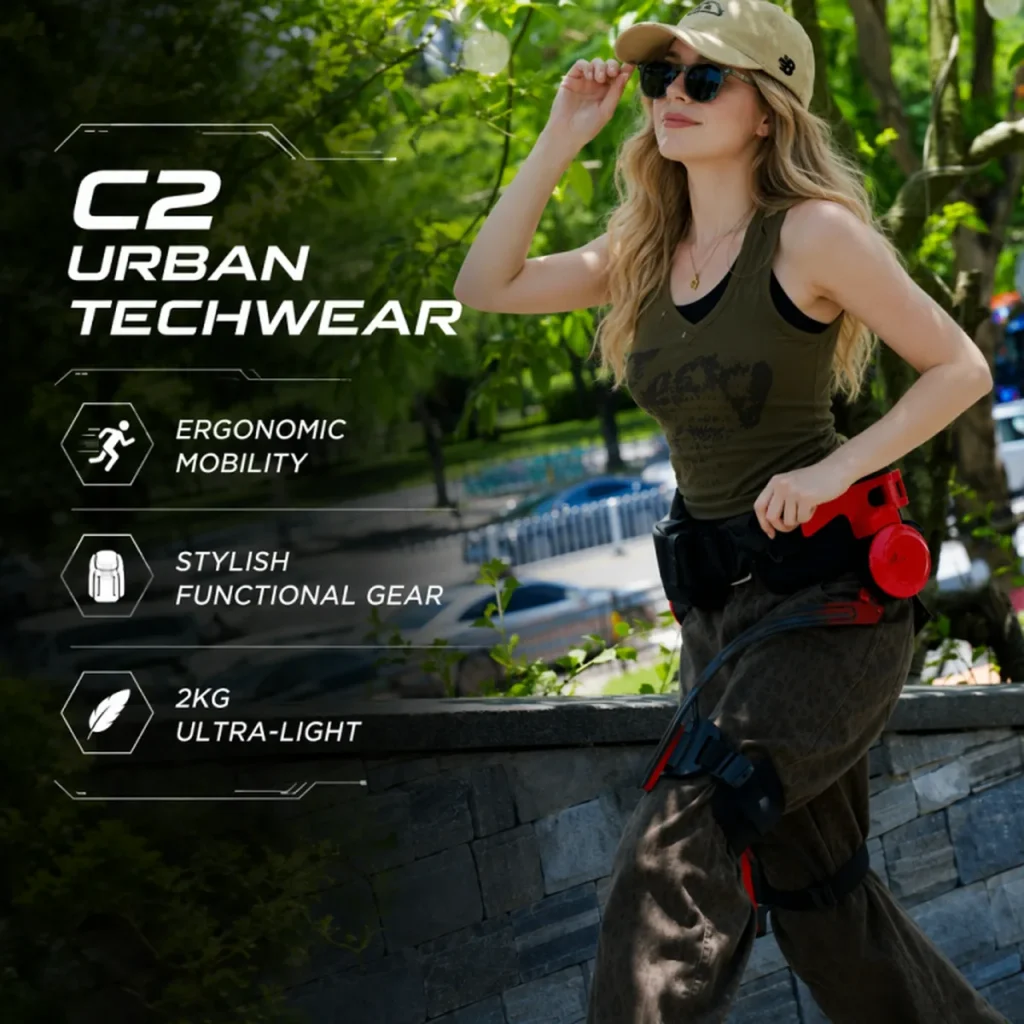
Weight determines who can practically use the device and how easily it is put on and taken off. The newest generation of wearable exoskeletons has reached the 2 kg class — for example, carbon-fiber models such as the US-H8-2.0 and Gearflow C2. At this weight, a device can be worn for extended sessions and folded for transport, which matters for homecare users and traveling clinicians.
2. Battery life
Most current wearable models offer 4–6 hours of operation per charge. Check whether the stated figure refers to active assistance time or standby time, and match it to your session length. A rehab center running back-to-back training sessions needs different endurance than an individual user taking daily walks.
3. Height range and fit
A practical exoskeleton should fit most of your users without custom fabrication. Our wearable models adjust for user heights of 1.5 m to 1.9 m, covering the vast majority of adults. For distributor purchases, confirm the adjustment mechanism covers your target market’s population.
4. Actuation and torque
Actuation determines how much assistance the device can provide. The Gearflow C2, for instance, delivers up to 1000 W peak power and 42 Nm of joint torque — enough to support active walking, hiking and running assistance. Lower-torque designs are generally adequate for light walking support but may limit training intensity in clinical settings.
5. Control modes and intelligence
Look at how the user interacts with the device: auto-adaptive gait control, voice control, companion apps, and adjustable assistance levels all change the user experience. AI-assisted models such as the US-H8-2.0 adapt assistance to the wearer’s movement, which is particularly relevant for elderly users whose gait varies between sessions.
6. Warranty and supplier support
Exoskeletons are electromechanical devices; parts and service matter over a multi-year ownership cycle. Our exoskeleton range carries a 1-year warranty as standard. When comparing suppliers, ask specifically about spare parts availability, software updates and after-sales response times — these often matter more to total ownership cost than the initial unit price.
Clinical Applications: Stroke, SCI and Mobility Training
Exoskeletons are used across three broad rehabilitation scenarios:
- Stroke rehabilitation. Repetitive, task-specific gait practice is a cornerstone of post-stroke walking recovery. An exoskeleton can help deliver consistent gait cycles with adjustable assistance as the patient progresses.
- Spinal cord injury (SCI) and neurological conditions. For users with impaired standing or walking ability, exoskeletons can support assisted standing and stepping movements within a supervised program.
- Age-related mobility decline. Lightweight walking-assist models support everyday mobility and fall-risk reduction for elderly users, and are increasingly used in homecare settings.
It is important to distinguish device categories here. Clinical gait training systems such as the ZX-08 are designed for structured standing and walking rehabilitation in rehabilitation centers, hospitals and homecare environments. In contrast, ultra-light wearable models (2 kg class) primarily provide walking assistance for elderly users and rehab patients, and — in the case of the Gearflow C2 — extend to outdoor activities like hiking and running.
Appropriate use always depends on individual assessment by qualified professionals. Devices should be introduced as part of a supervised rehabilitation or mobility program, not as a replacement for clinical judgment.
Certifications & Safety for Global Markets
For importers and distributors, certification status directly determines which markets you can sell into. The key frameworks are CE marking under the EU Medical Device Regulation (MDR), FDA 510(k) clearance for the United States, and ISO 13485 as the underlying quality management standard — we explain these in detail in our CPM machine certifications guide, and the same principles apply to exoskeletons.
Within our exoskeleton range, the US-H8-2.0 is CE and ISO certified. Certification status varies by model, so always confirm the exact certificates for the specific model you plan to import — and ask for certificate copies with scope and validity dates, not just logos.
A practical importer’s checklist:
- Request the certificate copy and verify the certificate number with the issuing body
- Check the certificate scope covers the actual device class, not a related product
- Confirm validity dates and the registered legal entity name
- For the EU, clarify whether an EU Authorized Representative is in place (ours is)
- Ask which ISO 13485-certified facility manufactures the product
OEM / ODM Customization for Distributors
Exoskeletons are a young, fast-moving category — which makes them attractive for distributors building their own brand. Our OEM/ODM program covers customization including but not limited to:
- Logo and branding
- Color options
- Packaging and manual language
- Further customization on request
Key commercial terms:
- MOQ: 1 piece — you can start with a single evaluation unit
- Sampling / customization lead time: 7 days
- Standard delivery: 10–15 days
A 1-piece MOQ significantly lowers the entry barrier: you can test the product with real users in your market before committing to volume. See our OEM & ODM page for the full customization workflow, or read our practical notes on MOQ and OEM terms for rehab equipment distributors.
Total Cost of Ownership & ROI for Clinics
Focusing only on unit price is the most common sourcing mistake in this category. Total cost of ownership (TCO) for an exoskeleton program includes:
- Acquisition: device cost, spare batteries, accessories
- Training: staff onboarding and user fitting time
- Maintenance: wear parts, calibration, firmware updates
- Support: after-sales response and shipping of parts
On the revenue side, clinics typically model ROI from the number of serviceable sessions per day, the billing model per session, and the device’s utilization rate across different user groups. A device that fits a wider height range (1.5–1.9 m) and serves both standing/gait training and daily walking assistance can achieve higher utilization than a single-purpose unit — which is why we recommend clinics evaluate utilization scenarios before comparing prices.
Because exoskeleton pricing depends on configuration and order volume, we quote per requirements rather than publishing fixed prices. Request a quote with your target market and expected volume, and we will prepare a configuration and pricing proposal.
Exoskeleton vs. Traditional Gait Training Aids
Where does an exoskeleton fit against the equipment you may already own?
| Equipment | Primary use | Best suited for |
|---|---|---|
| Rehabilitation exoskeleton | Assisted walking, gait training, mobility support | Stroke/SCI rehab programs, elderly mobility, active outdoor assistance |
| CPM machine | Continuous passive motion for joints after surgery or injury | Post-operative ROM recovery in clinics and homecare |
| Walker / rollator | Passive balance and weight support | Users with residual walking ability needing light support |
These categories complement rather than replace each other. A rehabilitation center may run CPM therapy for post-surgical joint recovery while operating exoskeleton-based gait training for neurological patients. If you are sourcing CPM equipment, see our CPM machine buyer’s guide.
Recommended Exoskeleton Models from Our Range
Our current exoskeleton line covers three distinct use cases:
US-H8-2.0 — AI Exoskeleton Walking Robot (2 kg ultra-light, Pro)
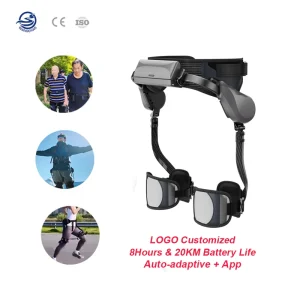
A 2 kg foldable walking exoskeleton built from carbon fiber, aviation aluminum and ABS, with 4–6 hours of battery life, AI-assisted auto-adaptive walking, companion app support and a 1.5–1.9 m height range. CE and ISO certified. Designed for elderly users and rehabilitation walking support, with logo customization available. A strong default choice for distributors targeting the senior mobility and homecare segments.
Gearflow C2 — Ultra-Light Carbon Fiber AI Exoskeleton
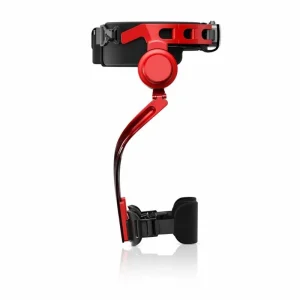
Also in the 2 kg class, built on a carbon fiber and magnesium alloy frame with up to 1000 W peak power and 42 Nm joint torque. It supports walking, hiking and running assistance, with voice control, adjustable height and 4–6 hours of battery life. Customized color and logo are accepted. Best suited for markets where users want an active-lifestyle walking aid rather than a purely clinical device.
ZX-08 — Gait Training Exoskeleton Robot (Standing & Walking Rehab)
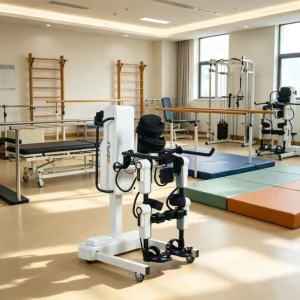
A lightweight adjustable aluminum gait training system for assisted standing and walking training, designed for indoor use in rehabilitation centers, hospitals and homecare environments. Customized logo and OEM/ODM are accepted. This is the model to specify for structured clinical gait training programs.
Browse the full range on our exoskeleton category page.
Quick Comparison
| Spec | US-H8-2.0 | Gearflow C2 | ZX-08 |
|---|---|---|---|
| Category | Wearable walking exoskeleton | Wearable walking exoskeleton | Gait training system |
| Weight | 2 kg (foldable) | 2 kg | — |
| Material | Carbon fiber + aviation aluminum + ABS | Carbon fiber + magnesium alloy | Aluminum |
| Battery life | 4–6 hours | 4–6 hours | — |
| Power / torque | Electric, AI auto-adaptive | Up to 1000 W / 42 Nm | — |
| Height range | 1.5–1.9 m | Adjustable | Adjustable |
| Key control features | AI adaptive + app | Voice control | Assisted standing & gait training |
| Best for | Elderly & rehab walking support | Walking, hiking, running | Clinic / homecare gait training |
| Certification | CE / ISO | Confirm per model | Confirm per model |
| MOQ | 1 pc | 1 pc | 1 pc |
| Warranty | 1 year | 1 year | 1 year |
Specifications marked “—” are not applicable or not published for this model; confirm details with us before ordering.
Frequently Asked Questions
What is the difference between a rehabilitation exoskeleton and a CPM machine?
A CPM machine moves a single joint (typically the knee or shoulder) through a passive range of motion, mainly after surgery. An exoskeleton is worn on the body and assists whole-body walking or standing. Many rehabilitation facilities use both — CPM for post-operative joint recovery, exoskeletons for gait training.
Are these exoskeletons suitable for home use?
Yes. The ZX-08 is explicitly designed for indoor, homecare and hospital use, and the ultra-light wearable models (US-H8-2.0, Gearflow C2) are built for everyday walking assistance by individual users. All wearable models fit users from 1.5 m to 1.9 m in height.
Can I order a single unit for evaluation?
Yes. The MOQ is 1 piece for all three models, so you can evaluate the product with real users before committing to volume orders.
Do you support OEM branding?
Yes. We support OEM/ODM customization including logo, color and more, with a sampling lead time of around 7 days. See our OEM & ODM page for the workflow.
What certifications do the exoskeletons carry?
The US-H8-2.0 is CE and ISO certified. Certification status varies by model — confirm the exact certificates for the model you intend to import, and always request certificate copies with scope and validity dates.
What is the typical lead time?
Standard delivery is 10–15 days, with around 7 days for customized samples. Confirm current lead times for your destination market when requesting a quote.
Request a Quote
Whether you are equipping a rehabilitation center or launching an exoskeleton product line under your own brand, we can help you match the right model to your use case. Tell us your target users, market and expected volume — we will reply with a configuration recommendation, certification details and pricing. Contact us to request a quote.