Neurostimulation has moved out of specialist labs and into rehabilitation centers, wellness programs and home care. As inquiries pour in, three acronyms keep coming up: rTMS, tDCS and CES. They all belong to the non-invasive brain stimulation family, but they work in different ways, suit different settings, and answer different clinical questions.
This guide compares the three technologies side by side, maps each to the settings where it fits best, and closes with the questions to ask before you place an order — so your next neurostimulation purchase is driven by fit, not by acronyms.
The Three Technologies in One Minute
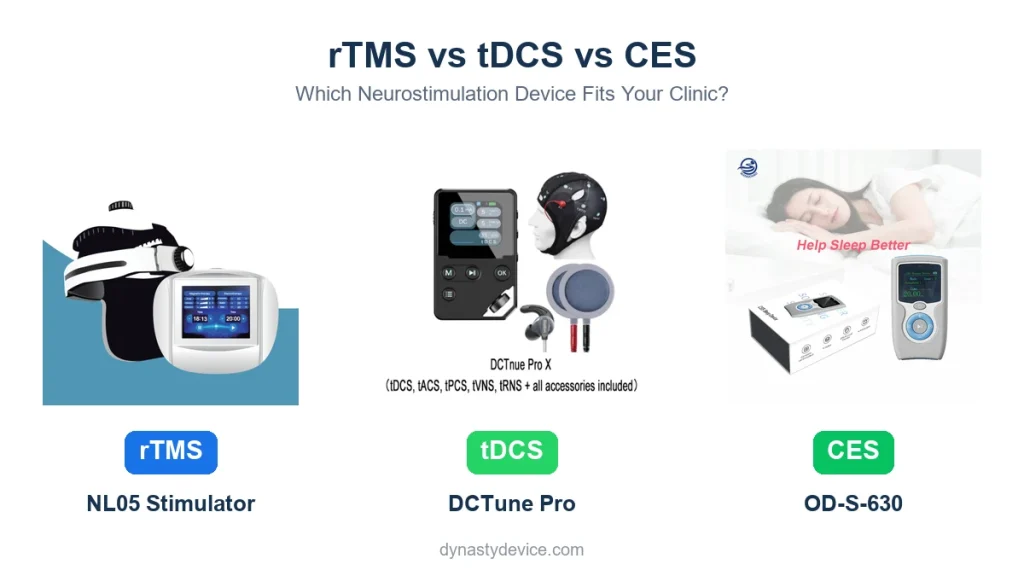
- rTMS (Repetitive Transcranial Magnetic Stimulation) uses repeated magnetic pulses delivered through a coil positioned on the scalp. It is the most protocol-driven of the three and is typically operated by trained staff in hospital and rehabilitation settings.
- tDCS (Transcranial Direct Current Stimulation) delivers a weak direct current through scalp electrodes. Modern units are pocket-sized, app-controlled and support multiple stimulation modes.
- CES (Cranial Electrotherapy Stimulation) applies a gentle pulsed microcurrent, most commonly through ear-clip electrodes. Programs are preset and simple to run, which makes it popular for sleep and stress-management support.
One sentence to remember: rTMS is the clinical heavyweight, tDCS is the flexible multi-tool, CES is the preset-and-go option.
What Each Device Does Best
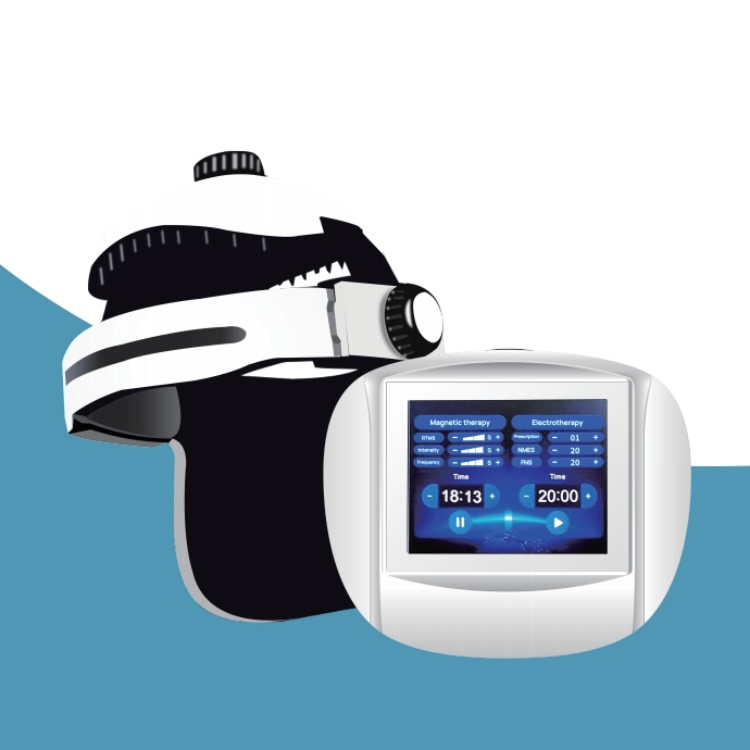
NL05 — rTMS for Hospitals and Rehab Centers
Our NL05 is a repetitive transcranial magnetic stimulation device designed for depression, anxiety and cognitive rehabilitation programs in hospitals, clinics and rehab centers. Sessions are protocol-driven and staff-operated, which fits departments that already run structured therapy schedules and want a non-invasive neuromodulation line alongside physical therapy. If your facility is building a dedicated neuro-rehabilitation room, this is the anchor device. Explore the NL05 rTMS device.
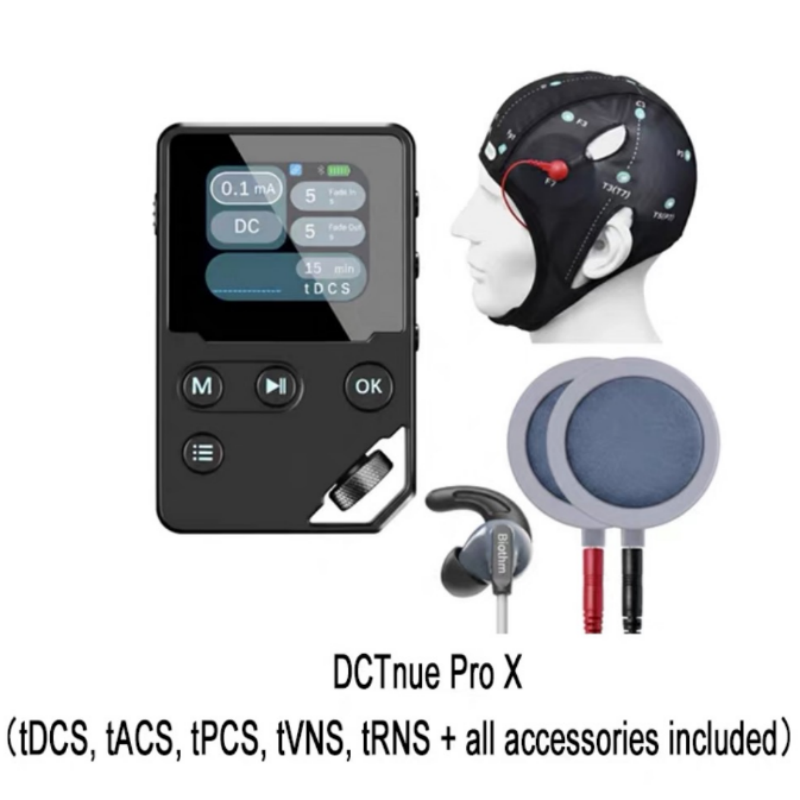
DCTune Pro — Multi-Mode tDCS for Home and Clinic Programs
The DCTune Pro is a four-mode unit — tDCS, tACS, tPCS and tVNS — with a current range of 0.1 to 4.5 mA, real-time display of mode, intensity and countdown, and control through the TuneFlo app on iPhone and iPad. The main unit weighs just 140 g and runs up to 8 hours on a charge (USB Type-C), with session durations adjustable from 5 to 60 minutes. Accessories include a headband, a 19-position positioning cap and sponge pads, so programs can be tailored per user. It suits distributors building portable home-care and wellness product lines as well as clinics running supervised programs. Explore the DCTune Pro tDCS device.
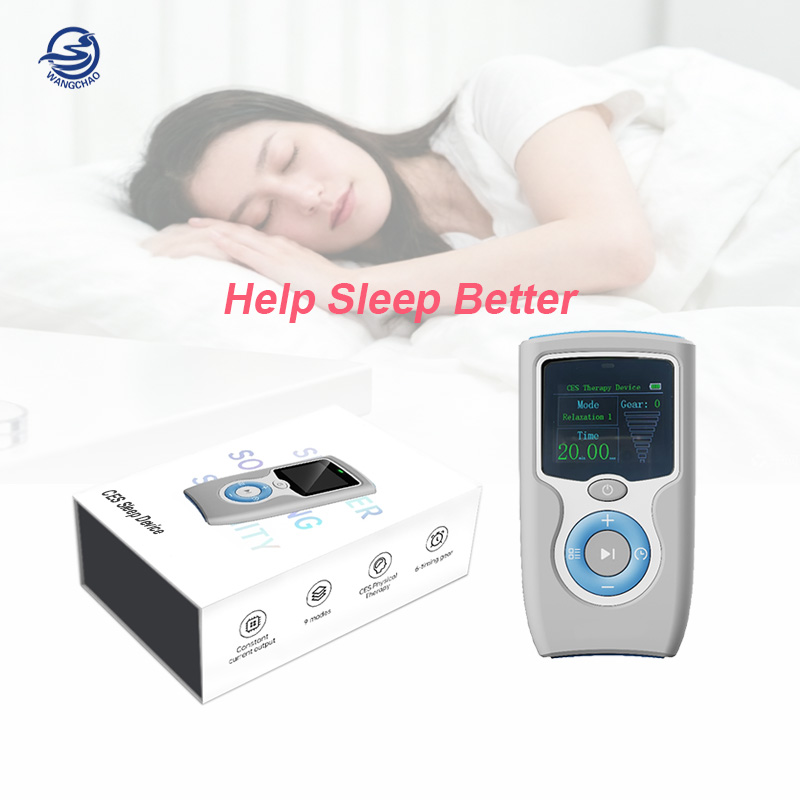
OD-S-630 — Preset CES for Sleep and Stress Programs
The OD-S-630 applies cranial electrotherapy stimulation with an output current of 0.5 to 1.5 mA, 9 preset modes and 10 intensity levels on a 2.4 inch LCD — no app, no configuration, just select a mode and run a session. The 160 g unit runs at least 4 hours per charge over USB Type-C and carries a 1-year host warranty with lifelong repair support. It is positioned for insomnia, anxiety and stress-relief support programs in home care, elderly care and clinic settings. Explore the OD-S-630 CES device.
Side-by-Side Comparison
| NL05 (rTMS) | DCTune Pro (tDCS) | OD-S-630 (CES) | |
|---|---|---|---|
| Technology | Repetitive transcranial magnetic stimulation | tDCS / tACS / tPCS / tVNS | Cranial electrotherapy stimulation |
| Stimulation | Magnetic pulses via coil | 0.1 – 4.5 mA direct current | 0.5 – 1.5 mA pulsed microcurrent |
| Modes | Protocol-driven clinical sessions | 4 modes + TuneFlo iOS app | 9 presets, 10 intensity levels |
| Portability | Clinic-grade unit | 140 g pocket unit | 160 g handheld |
| Power | Clinical use | Up to 8 h per charge (USB-C) | At least 4 h per charge (USB-C) |
| Best fit | Hospitals and rehab centers | Home and clinic programs, distributors | Sleep, anxiety and stress-support programs |
How to Choose by Setting
- Hospitals and rehabilitation centers with dedicated therapy rooms and trained staff: start with rTMS. It anchors a neuro-rehabilitation program and pairs naturally with existing physical-therapy schedules.
- Distributors and home-care brands: tDCS offers the widest program variety in the smallest body, plus app control that end users increasingly expect.
- Sleep clinics, elderly care and stress-management programs: CES preset simplicity means minimal training, minimal setup and a fast path to a repeatable daily routine.
- Running a mixed portfolio? Many of our distributor partners combine one rTMS unit for the clinic floor with tDCS or CES lines for home-use programs — the three technologies do not cannibalize each other because they answer different protocol questions.
Five Questions to Ask Before You Order
- Which certificates and technical documents are available for this model in my destination market?
- How are protocols configured, and what staff training materials come with the device?
- Which accessories and consumables (electrodes, caps, sponge pads) are included, and how are they resupplied?
- What are the warranty and repair terms for the host and accessories?
- Can the device be customized with our brand for our channel?
Ask these five questions and most neurostimulation purchasing mistakes disappear — the answers reveal whether a device genuinely matches your setting.
For Distributors: OEM, Low MOQ and Documentation
We manufacture the full neurostimulation lineup (Guangxi Dynasty Medical Device Technology Co., Ltd.) and support distributor and clinic-group programs:
- MOQ of 1 piece — evaluate a single unit before volume orders
- OEM/ODM customization — logo, color, manual and packaging, with sampling in about 7-20 days
- Standard delivery of 10–30 days after order confirmation
- Documentation support — certificate copies and technical documents for local registration
Details on our OEM and ODM program.
Frequently Asked Questions
What is the difference between rTMS, tDCS and CES?
rTMS delivers repeated magnetic pulses through a scalp coil and is typically operated by staff in clinical settings. tDCS applies a weak direct current through electrodes and is highly portable. CES applies a gentle pulsed microcurrent through ear-clip electrodes with preset programs. Each suits different protocols, settings and users.
Which device should a rehabilitation center start with?
Centers with therapy rooms and trained staff usually start with rTMS as the anchor of a neuro-rehabilitation program. Centers that mainly serve home-care or wellness programs often begin with tDCS or CES lines instead.
Are these devices suitable for home use?
The DCTune Pro (tDCS) and OD-S-630 (CES) are built for portable home and clinic use, with preset or app-guided operation. rTMS is positioned for hospitals, clinics and rehab centers with trained operators.
How are sessions and protocols configured?
The OD-S-630 uses 9 preset modes with 10 intensity levels. The DCTune Pro supports 4 stimulation modes with app control and sessions of 5 to 60 minutes. The NL05 follows the clinical protocol of your facility, and our team provides operation training materials for your staff.
What is the MOQ, and do you support OEM branding?
The MOQ is 1 piece. OEM and ODM customization of logo, color, manual and packaging is supported, with sampling in about 7 days and standard delivery of 10 to 15 days after order confirmation.
What about warranty and certification?
Warranty terms are confirmed in the order contract — for example, the OD-S-630 carries a 1-year host warranty with lifelong repair support. Certification status varies by model and destination market; certificate copies and technical documents are provided with every order.
Talk to the Manufacturer
Tell us your department type, target indications and staff setup — or your target market and channel if you are a distributor — and we will recommend the technology and model that fits. Send us an inquiry; we reply with a proposal and the right configuration, not a generic price list.