
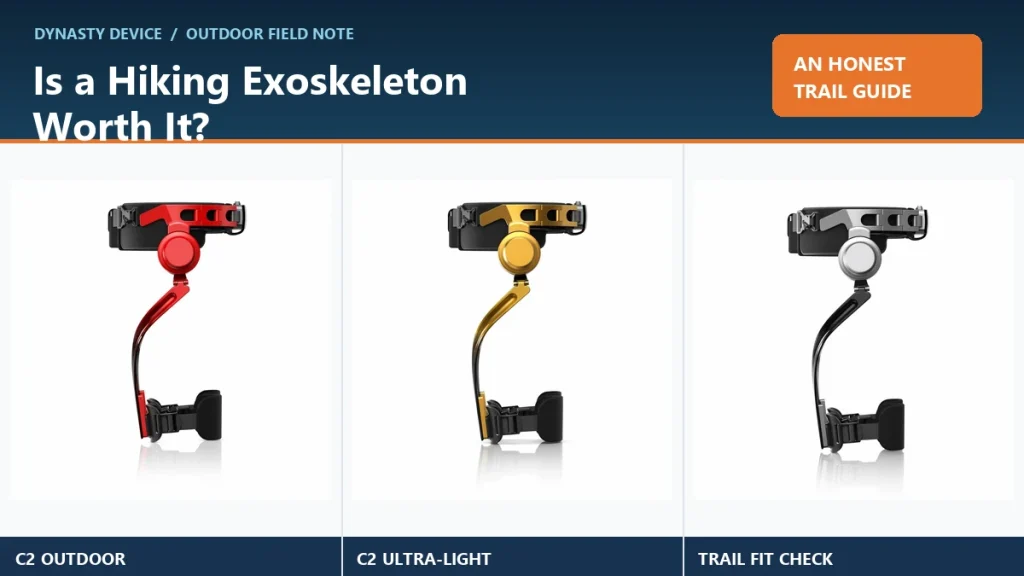
Most gear reviews answer the buying question in the first line. We will not, because the honest answer is: it depends on the trail, the load you carry and what you expect the device to do. A powered hip-type exoskeleton can change how a long climb with a heavy pack feels. It will not turn a short, flat or ultralight day hike into a better day, and it is not a medical device.
This guide is written for hikers, outdoor retailers and distributors who are looking at consumer walking-assist devices for the first time. We build two of them — the C2 AI Outdoor Exoskeleton and the Youlong 2.0 — so we have a clear interest in being accurate rather than enthusiastic. Here is where powered assistance helps, where it does not, and what to check before you commit.
What a hiking exoskeleton actually does
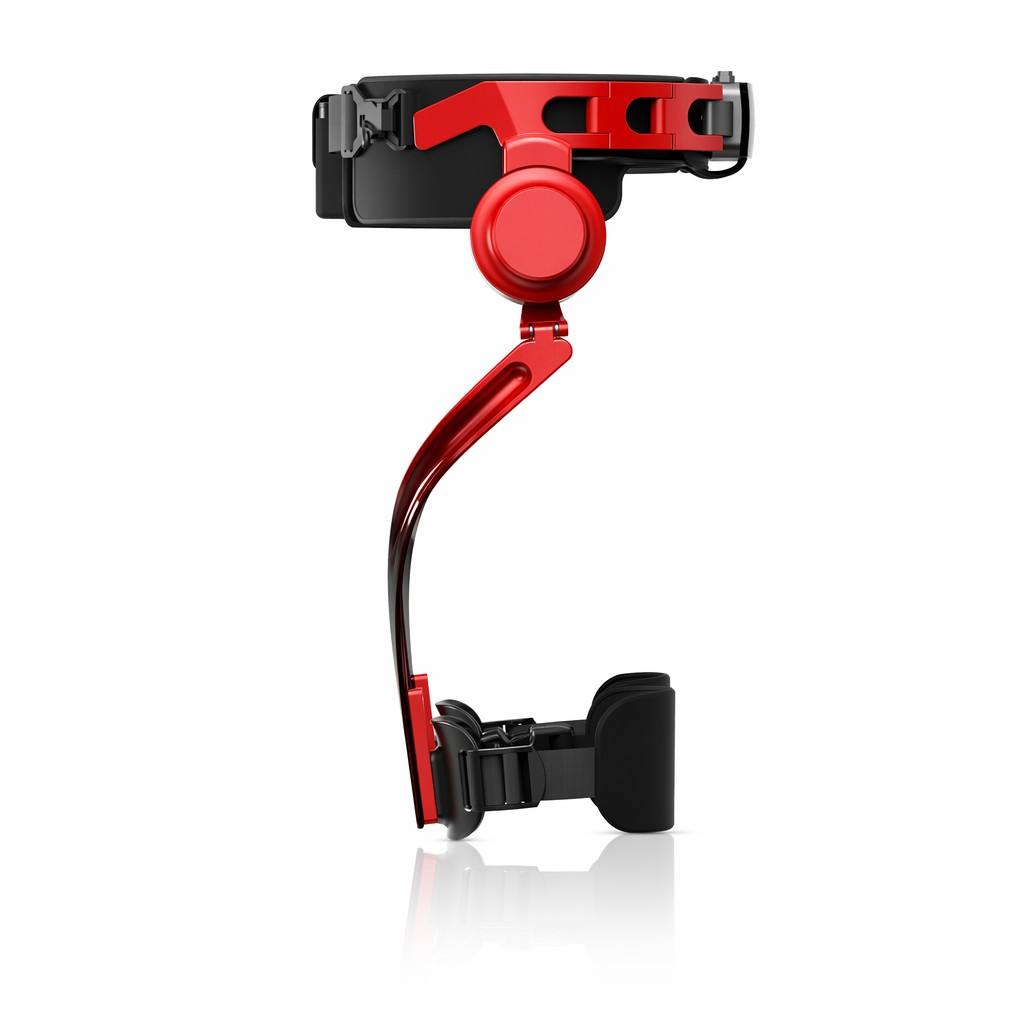
A consumer hiking exoskeleton is a wearable frame that sits at the waist and connects to the legs, with a motor and battery that add torque at the hip during part of the stride. It is an outdoor assist product, closer to an e-bike in spirit than to a clinical device. It does not hold you up, correct your gait or treat a condition.
That distinction matters. The category grew out of rehabilitation robotics, but the outdoor products now being sold to hikers, photographers and long-distance walkers are positioned as consumer gear, not medical equipment. If you need a device for a diagnosed mobility condition, this is not the category to shop in.
Where it genuinely helps
- Long climbs and repeated ascents. This is the scenario hikers report most consistently. Sustained uphill work is where extra hip torque has the most to do, and where a heavy pack makes the biggest difference.
- Carrying real weight. Camera gear, survey equipment, a full overnight pack or supplies for a long shift on foot. The heavier the load, the more sense a powered assist frame makes.
- Long days where fatigue, not speed, is the limit. If the goal is to finish a route still able to enjoy the last hour, a moderate assist level is a reasonable tool.
Notice what is missing from that list: headline numbers. Published percentages about reduced oxygen use or heart rate come from controlled tests on specific products under specific conditions. They are not our data, and they are not a promise for any device on any trail.
Where it does not
- Ultralight and fast-and-light hiking. Every gram you carry is a gram you carry all day. If your whole kit is built around saving weight, a motor and battery work against the idea.
- Flat, short or technical terrain. On level ground the benefit is far less obvious, and on scrambles, loose scree or narrow exposed sections, a rigid frame can be a nuisance rather than a help.
- Running and high-impact use. Unless a manufacturer explicitly confirms it, do not assume a walking-assist device is designed for the impact and cadence of trail running.
- Downhill as a joint-protection story. Some hikers like the controlled feel on a descent, but we make no claim about protecting knees or preventing injury.
Writing the limitations down is not modesty. A product that is right for a heavy-pack ascent and wrong for an ultralight loop is a product with a clear use case, and clear use cases lead to far fewer returns.
Is using one cheating?
This question shows up in almost every trail forum, and it is really a question about goals. If the objective is a hard training session, use a low assist level or leave the device at home — the workload stays exactly where you want it. If the objective is to complete a long route with a heavy pack and still have something left at the end, assistance is simply another piece of gear, like a trekking pole or a lighter tent.
We do not take a side, and we do not sell it as a fitness shortcut. The most useful framing we have heard is simple: decide what the day is for, then choose the gear that serves it.
Exoskeleton vs trekking poles
| Question | Trekking poles | Powered exoskeleton |
|---|---|---|
| Main job | Balance, rhythm, upper-body support | Added torque at the hip during the stride |
| Weight and power | Very light, no battery | Frame plus battery, needs charging |
| Best terrain | Rough ground, descents, creek crossings | Sustained climbs with a load |
| Fit process | Adjust length | Waist, leg straps and backpack compatibility |
They are not substitutes. Plenty of hikers will keep poles in their hands while wearing an assist frame, especially on mixed terrain.
The backpack problem nobody mentions
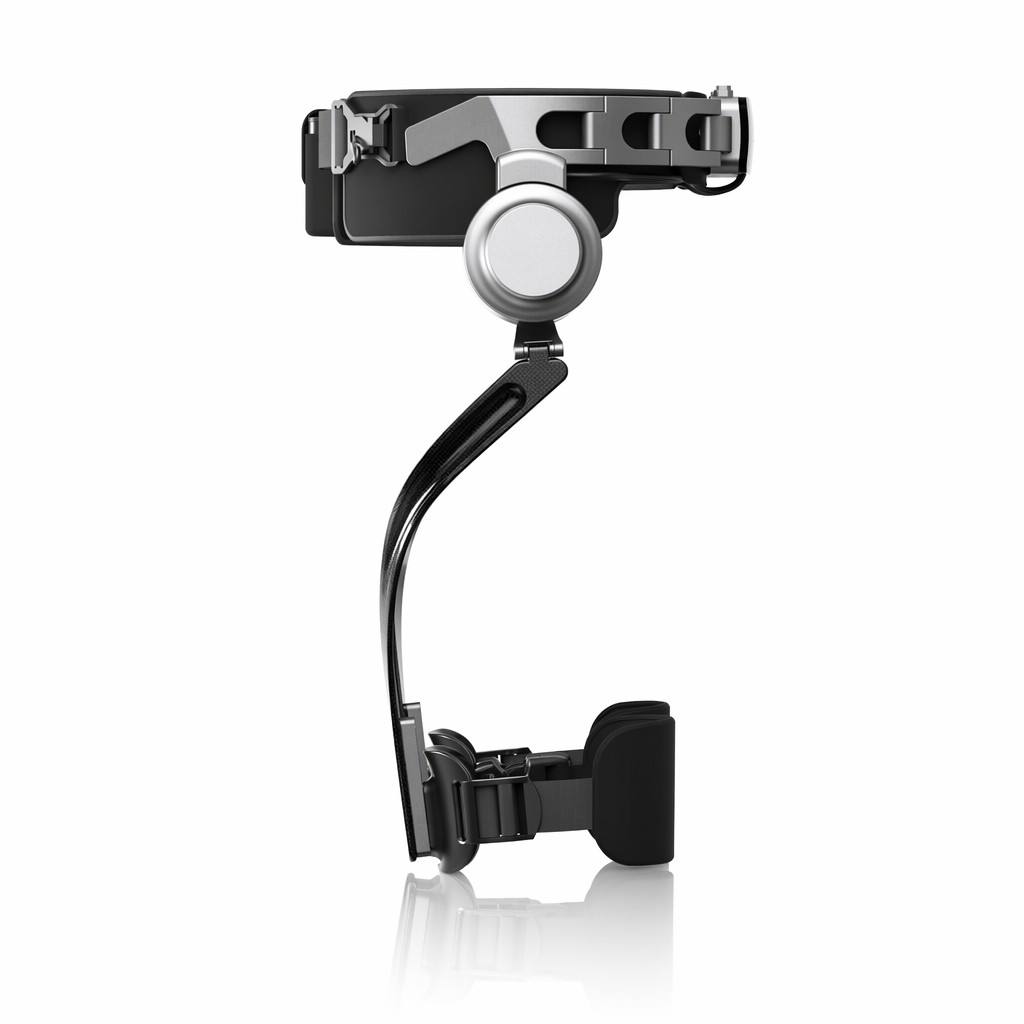
Read enough owner comments and the same complaint appears: the hip belt and the waist-mounted frame want the same space. It is not a spec-sheet issue, it is a fitting issue, and it decides whether the device feels helpful or annoying after the first hour.
Three things to test with the pack you actually carry, loaded to its normal weight:
- Can the hip belt sit where it should without pressing on the frame or the battery housing?
- Do the leg straps clear the pack and stay put on a steep step-up?
- How quickly can you take the whole thing off at a rest stop, and does it fit in or on the pack afterwards?
Ask for a trial fitting or a short local walk before a long trip. No amount of specification reading replaces an hour with the real kit on.
Who should not use one
Our C2 and Youlong 2.0 devices are consumer outdoor and daily walking assist products, not medical devices. They are not intended to diagnose, treat or rehabilitate any condition, and they are not a substitute for a prescribed mobility aid or for professional clinical advice. We do not make claims about fall prevention, joint protection or therapeutic outcomes.
If you have a medical condition, a recent injury, or you have been prescribed an assistive device, speak with a qualified professional first. For those needs, the appropriate category is clinical rehabilitation equipment, which is a different product line with different documentation.
A short checklist before you buy
- What is the actual terrain? Long climbs with a load, or short flat loops? Answer this first.
- What is the real weight of the whole system, including the battery, and how does it compare with what you normally carry?
- What is the real-world runtime on hills in cold weather, not just the nominal figure on a spec sheet? Ask how a spare battery is carried and swapped.
- What exactly does the ingress rating cover? An IP54 rating is splash resistance, not waterproofing and not permission to wade a river.
- Can you use it without a phone? Physical buttons matter when signal, gloves or a flat phone battery get in the way.
- How does it pack for travel? Folding helps; airline and lithium-battery rules still apply, so check the latest carrier and IATA guidance yourself.
- What happens after the sale? Warranty terms, spare parts and demo-unit availability differ by model and by market. Get them in writing.
We deliberately have not filled this list with numbers. Published figures vary with conditions, and our own product documentation should be the source for any specification you put in a purchase decision. Ask us for the current outdoor spec sheet instead of copying a number from a review.
Frequently asked questions
Is a hiking exoskeleton worth it for most walkers?
It depends on the route and the load. Powered hip assistance is most noticeable on long climbs and repeated ascents with a heavy pack. For a short, flat or ultralight day hike, the extra weight and the battery are a poor trade. Decide by the terrain you actually walk, not by the most impressive demo video.
Do powered exoskeletons really reduce effort?
They can change how a climb feels by adding torque at the hip during part of the stride, but the result varies with terrain, pace, assist level, pack weight and the wearer. Published laboratory percentages come from controlled tests on specific products and should not be treated as a promise for any device. The only reliable test is a fitting session on your own route.
Is using an exoskeleton on a trail cheating?
That is a question about personal goals, not about the hardware. If the goal is a training workout, a low assist level or no device keeps the workload where you want it. If the goal is to finish a long route with a heavy pack while still enjoying the day, assistance is simply another piece of gear. We do not take a side, and we do not market it as a fitness shortcut.
How is a hiking exoskeleton different from trekking poles?
Trekking poles are light, cheap and give balance and upper body support on rough ground. A powered exoskeleton is a wearable hip device that adds motor assistance, and it brings a frame, a battery and a fit process with it. They solve different problems and many hikers will keep using poles. Poles are also the better answer when balance, not leg effort, is the limiting factor.
Can I wear a hiking backpack with a powered exoskeleton?
Often yes, but it is the most common real world complaint. A hip belt and a waist mounted frame compete for the same space, and a poorly matched pair is uncomfortable within an hour. Ask for a trial fitting with the pack you actually carry, loaded to normal weight, and check belt routing, leg strap clearance and how quickly the device can be removed on the trail.
Who should not use an outdoor exoskeleton?
These are consumer outdoor and daily walking assist devices, not medical devices. They are not intended to diagnose, treat or rehabilitate any condition, and they are not a substitute for a prescribed mobility aid or for professional clinical advice. Anyone with a medical condition, a recent injury or a prescribed assistive device should speak with a qualified professional before considering powered assistance.
The honest verdict
A hiking exoskeleton is worth it when your day involves sustained climbing, real weight on your back and a reason to protect your energy for the last hour. It is not worth it for ultralight fast hiking, technical scrambling, or anyone looking for a medical or therapeutic outcome. The category is genuinely useful, but it is narrower than the marketing makes it look.
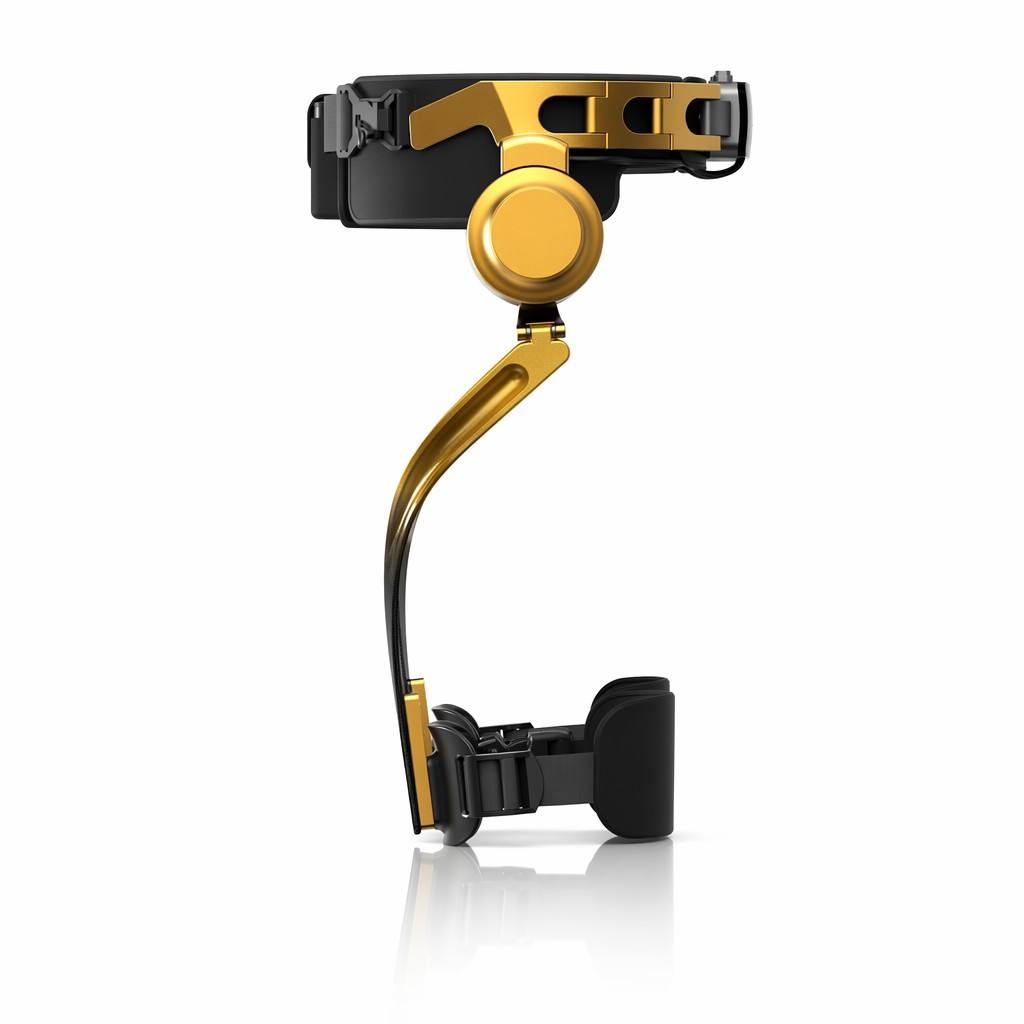
If that describes your routes, start with a fitting and a short local walk rather than a long trip. Our C2 AI Outdoor Exoskeleton is built for hiking use, the C2 ultra-light model covers the lighter end of the line, and the Youlong 2.0 (US-H8-2.0) walking assist exoskeleton is our foldable option for travel and daily use.
For retailers and distributors, we can share the current outdoor spec sheet, warranty terms and distributor kit — including the C2 wholesale and regional agency program. Tell us the terrain and the load you are designing for and we will point you to the right configuration before talking about anything else.